Welcome to

FARM & APIARY
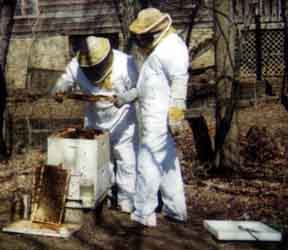

THIS IS INFORMATION ABOUT ME
My name is Rob Green, and I believe that you'll find that my honey is the best tasting you can find anywhere. I say this because that's what everyone is saying when they taste Bluffwood
Creek honey.
I'm an Advanced Master Gardener and past president of the Master
Gardeners Association in Hendricks County, Indiana and started keeping bees,
in part, to help with pollination. I train beekeepers. In fact, since 2000, I've
trained well over a thousand beekeepers.
THIS IS INFORMATION
ABOUT THE HONEYBEES
- Bees are necessary to a significant portion of our agricultural economy, and
most wild honeybees have died out from parasites and disease. With state
budget cuts, and the DNR no longer restricting bees coming in from hive-beetle
infested areas, I'm very concerned about the future of beekeeping in Indiana. I started
selling my honey to my friends... and my friends told others... who told
others. And my single hive had become around 40! The hives are currently located
at my
farm in rural Hendricks County surrounded by farmland, clover meadows and
wildflowers. Each little worker honeybee works like crazy creating honey. One
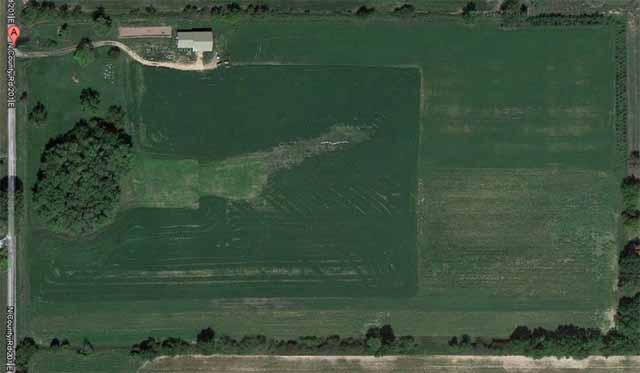
bee makes about 1/12 of a teaspoon of honey in her lifetime! This is my 22
acre farm.
-
-
Every spring I say, "that past winter was the worst winter
we've ever had" because of dead hives. Here are my hive losses for the past
four years:
-
2013-2014 100%
-
2012-2013 80%
- 2011-2012
35%
-
2010-2011 85%
- 2009-2010
80%
-
- WHY ARE THE BEES DYING?
-
- Cold winters are not the only reason. The summer of
2010, a USDA
survey of our colonies indicated low but significant levels of Nosema Cerana, a micro
sporidian fungal parasite that has all beekeepers really worried. Nosema, along
with the two dozen identified viruses that come for free from the bloodsucking
mites, is the toxic connection that appears to be the root cause of Colony
Collapse Disorder.
While almost all beekeepers with more than a hive or two use chemical mite
treatments and antibiotic treatments, we do not. And while we use only natural
remedies and techniques, it means our risk for die outs are as bad or worse
than the other beekeepers. On the positive side, our honey is far and away
better tasting.
-
-
In August 2011, the USDA again sampled our bees. They studied the bees with
electron microscopes and could identify the viruses – now more than two dozen
and all injected by the varroa mite bites. And the USDA study also identifies
Nosema cerana as distinguished from Nosema apis, both bloodborne parasites
called microsporidians, the former being much more toxic than the latter. (The
USDA does not distinguish between the two types, for beekeepers outside of
this survey, so I'm fortunate to be in it). The results of the survey came near Christmas Day
2011, way too late to do anything
about it. The survey indicated that as of August 2011, I had only a few
virus types, and low numbers of infection. I also had very low levels of Nosema cerana. So I was encouraged and remained optimistic throughout the
winter.
The winter turned out incredibly mild and short. Apple trees were in blossom
before the end of March. My bees were inspected in March and the happy news
was ... we only lost 1/3 of the hives, a big improvement over the past two
years. In fact, on the last market day of March 2012, we had our honey once
again on the table at the market, and available for purchase from our website.
From the original count of survivors, at least one is queenless and another
one subsequently died, but the news is actually good, and actually
encouraging.-
-
That brings us to the most recent winter, 2013-2014.
With the record-breaking bone-chilling days, weeks at a time, coupled with
bees already dealing with viruses and parasites, every colony died. EVERY ONE.
-
-
What's a beekeeper to do? I've invested in new
colonies and when people ask if they can help, I direct them to the first page
of this website, where there is a donate button.
SO, IT'S NOT CELL PHONES, TOWERS, KILLING THE BEES?
No. Cell
phones, cell towers, global warming, GMO crops and even neonicotinoids have been
exonerated so far in the causes of hive deaths. The cell phone story came from
an environmentalist in Europe, global warming from a politician. The concerns
about GMO crops and neonicitinoids are more complex. First of all, we're talking
about pesticides that are either a natural part of the plant or those applied as seed
coatings and sprays to the plants during the growing season. Insecticides kill
insects. (I'll bet that was no surprise to you). And honeybees are insects that
are very sensitive to insecticides. As far as honeybees are concerned, it would
be a much nicer world without these pesticides and the chemical surfactants in
the sprays.
But the one consistent symptom of our
honeybee problem, is that it's contagious and that it's pathogenic in nature.
Sick bees that are loaded with viruses and internal parasitic entities.
So this is
where the environmentalists and the majority of scientists & beekeepers part
ways. While they say they're concerned about the bees (typically native bees and
NOT honeybees – more about that later), their passion ends up being focussed on
GMO – specifically around here, at Monsanto – and Bayer, a major pesticide
maker.
A lot of people
have objections about GMO products, although the evidence they cite seems to
evaporate when examined closely. People are not dying from eating this stuff. In
fact, in some countries, certain crops now grow for the very first time, and
those that did prior to GMO are finding their yields increased and more people
are getting fed. Some object that animal RNA is being spliced into plant RNA,
and I understand that objection. But at the genetic level, the genome components
are neither animal nor vegetable.
But look, I'm
not a scientist. While I appreciated the passion by the environmentalists for a
while, I'm noting that there's more and more dishonesty, lying and outright
fraud. And while they may have put so much news through the google channel, a
lot of what they cite is simply not factual. I saw a blog that talked about a
"definitive" Harvard study that "conclusively" proved that colony collapse
disorder was caused by neonicitinoids. I've seen the study and if failed
miserably in peer review because the science kept moving the goal posts. In
fact, in the study, the scientist force fed neonicitinoids to bees in sugar
syrup. In violation of test standards, he had to keep increasing the dose until
some of the bees actually died. Of course insecticides killing insects is hardly
rocket science. But the scientist has won more funding to do more great... well,
whatever it is, it's not science.
Human life span
is increasing, not decreasing, and that's with GMO in 80% of what we eat. You
may not like that 80%, and I may not either, so it's up to us to choose what we
eat. The big fuss over GMO needing to be on the label... I'd like to see it, but
I already know, and you should too, that certified organic and CNG certification
both already means NO GMO.
So head to the organic section at Kroger, Wal-Mart, or visit Whole Foods (who
have some organic products) or your health food store (who again, have some of
their products being actually certified organic). You already have the tools to
eat healthy.
So, my farm IS
certified organic for the crops, and the hives and honey are certified by CNG
and is listed at www.naturally grown.org. There is no GMO allowed at my farm or
in my products, and no antibiotics, and no pesticides used as in the
conventional treatments for Varroa mites.
-
-
WHAT'S THE DEAL ABOUT RAW HONEY FROM A BEEKEEPER?
-
First of all, most store brand
honey contains imported honey. But honey comes from Argentina (cited for
dumping tainted honey below cost in the U.S. market and it often contains Nitrofurans
and Cipro,
an antibiotic). Chinese honey, for a while illegal but still appearing in the
USA and Canada in huge quantities, sometimes under the label "organic honey",
was banned entirely from Canada and the whole European community because of
measurable levels of chloramphenicol – an illegal substance that causes
aplastic anemia, a form of cancer. In fact, published reports in 2011
indicated that a third of all the honey for sale in the grocery stores was
Chinese in origin. Even worse, some of our most trusted honey companies are
admitting to finding tainted honey in the distribution system, and instead of
turning the brokers in to the authorities, they just push it back into the
distribution channels where some other company will buy it without checking
and offer it for sale to the public. Much of this honey is labeled Product of
USA, or sometimes Product of India or Product of Viet Nam, where it is shipped
via. But the label is not to be trusted.
References:
fda-seizes-chinese-honey-
why-honey-gets-contaminated-by-antibiotics
-
chloramphenicol found in honey,
fish, crabmeat in Louisiana
- Most store brand honey (if it truly originates from the USA or
Canada*) is presumed safe (and that is one awfully big presumption), however it has been heated, and
therefore has lost most of its flavor. This is actually done on purpose
because of the low grade and poorly flavored honey they use in store brands.
By heating cheap imported honey from China and South America (which has been
described as tasting like it was strained through dirty gym socks) they can
knock out most of the objectionable taste. They then blend it with the minimum
amount of a domestic honey needed to impart an acceptable flavor. It can still
contain organisms including "foulbrood" spores. It is for this reason that
when a hive is in trouble, we must never, ever feed the bees honey from a
store. There's too much risk of infecting the hive... Look at the label
closely... If
it just says PACKED in USA, or USDA GRADE A or CANADA No 1, there's an
excellent chance that it came in barrels from somewhere else. A honey vendor in Alberta, Canada was charged by the
government for mixing the most impure, rankest Chinese honey tainted with a
cancer causing drug in his bottle of Pure Alberta Organic Honey. So a label
that says "Product of USA" is not to be relied upon.
*What do we mean by truly originates in Canada or the USA? According
the to American Honey Producers Association in 2006, Chinese honey which now
also contains CIPRO (another banned substance) is showing up at Dollar Stores,
Discount Marts and Warehouse Clubs labeled as Product of USA. The fact is,
you cannot even trust the labeled country of origin. China now microfilters
their honey so there's no trace of pollen in it, that might identify the
country of origin. Europe, who already blocks the import of Chinese honey
(more successfully than the U.S. does) now refuses to allow honey without
pollen in it.
-
Companies including Sara Lee and Smuckers have found themselves in possession
of cheap bakery grade honey containing cancer causing chloramphenicol. We
documented this news in the state Beekeeping Journal.
If that's not bad enough, a Michigan honey packer had been accused of
diluting honey
with up to 5% high fructose corn syrup – a sweetener that is used in many
products from soft drinks to ketchup which has been linked to childhood
obesity – cannot be detected. This cheap corn sweetener costs pennies a pound
and is believed by some to be widespread in Amercian honey today. Finally, the
honey packer was one of two caught with adulterated honey. But it wasn't just
HFCS they were packing. They were found to be using Chinese honey in their
mix. As recently as early 2013, it was announced that the government
authoritied had settled for some fines but no jail time. And executives
directly involved were terminated. But by April 2013, news of a class action
lawsuit by other major beekeepers sought very large damages from these two
packers.
references:
nations-biggest-honey-packer-admits-laundering-chinese-honey
US
Justice Dept. document
funny-honey-bringing-trust-to-a-sweet-sector-fraught-with-suspicion
Who were these packers? They packed for a number brand
names, including store brands. One of the packers was Groeb Farms of Onsted,
Michigan. They pack for a lot of store brand labels.
But just so we're clear on this, in spite of Chinese
honey being UNSAFE, the government only charged them for not paying tariffs.
This action was not about consumer safety (which would have been the #1 reason
in my mind) but for lost tax revenue.
So you're safe if you buy from a beekeeper and request "raw honey," right?
And what's the deal about Raw Honey? Well, first of all, let's get it
straight. "Raw" states nothing about the purity of the honey. A beekeeper can
be using pesticides in his hives for mites, antibiotics too, even illegal
substances, and still call his honey "Raw" if it's never been heated.
So, if you want raw, pure honey, ask the following questions:
-
-
1. Have you ever used miticides, even organic ones, in your hives? If the
answer is yes, have you replaced 100% of your beeswax frames since the last dosage.
2. Have you ever used antibiotics? If the answer is yes, find out when and which one.
It will likely be, that antibiotics had been used as a preventive measure,
something every schoolchild knows is a bad idea.-
3. Have you fed your bees High Fructose Corn Syrup as bee feed?
-
-
And to belabor the point just a little bit longer, why is there a definition
issue with the word "raw" as in Raw Honey? Among some local honey
producers, they claim raw honey is raw because it wasn't "flash heated."
When pressed, they'll admit to warming or otherwise heating their honey. Let's
be real here. Raw meat is not raw if it's been gently heated or slow roasted.
The definition of raw honey is honey that has had no heating applied to it,
flash, slow or otherwise.
-
So a fourth question to ask is:
-
-
4. Do you heat your honey in any way, at any time during or after the
extraction process?
-
-
And finally, because many beekeepers are now selling honey from other
producers, this means they can't be sure of anything anymore. Honey is a
commodity, and you have no idea how many hands it's passed through. If the
label on the honey jar says "packed by..." ask question number 5
-
-
5. Is this honey produced 100% by your own bees?
- Is this important? It sure is. There was a time that all honey tasted better than it does now. It was all locally produced, or at least, product of USA
or Canada. While we can't make unsubstantiated claims, honey is different from region to region and particularly, country to country. Because it contains microscopic amounts of pollen, some believe that local honey can help with allergies. There's also been published material that suggests that honey contains a whole lot more than carbohydrates (plain ol' sugar). One thing for sure... our honey is local, unprocessed, and completely natural. Today, many beekeepers are out of business. Only diehard lovers of honeybees continue to produce local honey.
-
-
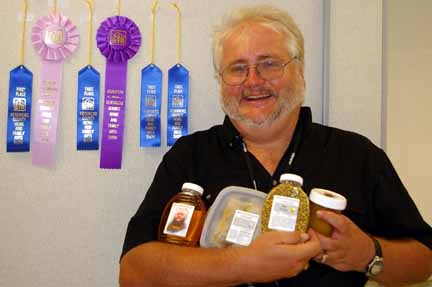
You can see a new photo below. This was taken in July 2007. Four honey
entries won four blue ribbons, one purple champion ribbon, and one lavender
reserve champion ribbon. My honey in my arms (labeled after judging) is
liquid, comb, pollen and cinnamon creamed.
- Here's a challenge for you. Do a taste comparison. Taste a small amount of store brand honey and then taste Bluffwood Creek honey. If you don't immediately think that our honey tastes better, send it back for a refund!
Read what people say about our honey!
Read what Hendricks County Magazine said about me
in May 2007
Read what
Indianapolis Monthly said about me in May 2011.
And what a
series of
short interviews Dick Wolfsie and WISH-TV did in June 2014.
Our honey is not USDA Organic, because our farm is
only certified by the USDA for the crops we grow, including Alfalfa, a mix of
four kinds of clovers, popcorn and sometimes other crops. However, we practice
chemical-free and antibiotic-free beekeeping. I do
everything I can to make the honey as safe and pure as I can. And that means a
great deal as all of the impure honey issues we've seen have had to do with
either what the beekeeper used to treat his hives or worse, fraudulent
activities such as adding corn syrup to honey to make more money.
But our honey IS certified as produced using the
standards by CNG at naturallygrown.org. Their
standards are tough and exacting..
Our honey is excellent, wonderfully tasting, and very very pure.
What would you like? Pure honeycomb squares?
One pound bottles of light honey? And 8,12, and 24oz bears of honey? They're all great. Other products?
Have you ever tried bee pollen? Pure beeswax? Beeswax is a natural wax that is used for lubrication around the home. Drawers stuck? Wood sticking to power saw? Screws hard to drive? Beeswax can help.
It's also used for hand creams, lipbalms and candles. Handcream? We've got an
incredible formulation. This cream contains Apricot Kernel Oil, Beeswax, Vitamin E and just a hint of essential oils. It's a fabulous handcream that you're sure to love. (I've got two unexpected testimonials from men about how this handcream helps fix ingrown hairs. One man,
Caucasian, had the hair on his arm. The other man, African American, had a problem with ingrown whiskers and is convinced that our cream solves his problem quickly and
reliably. I also got a testimonial about the cream quickly healing up a cold
sore.) Also available as a lipbalm in small containers. The lipbalm contains just a hint of honey for those sweet lips. Honey soap and candles are also for sale. In fact we have just a handful of special candle holders
too... click here.
We also grow USDA Certified Organic popcorn, which beats Orville Redenbacher in
independent tests.


